
_Panda Book••• ••••
••Price Guide
_•Coins for Sale•• ••• •••
Bad Bears: Counterfeit Pandas
Counterfeit Alert!
1989 Gold New York Numismatic Convention medals
A wave of fake 1/4 oz. gold 1989 New York Numismatic Convention medals has appeared on the market. They are most easily distinguished from genuine medals by their rough texture in the frosted areas and the softness of the design details. Some are seen in NGC-type holders.
A photo of a genuine 1989 medal is posted below. Please note the smooth texture of the frosting. I will post a photo of a counterfeit as soon as it is available. Shun any medal that looks a little "Sparkly" and doesn 't have a creamy texture as in the photo below.
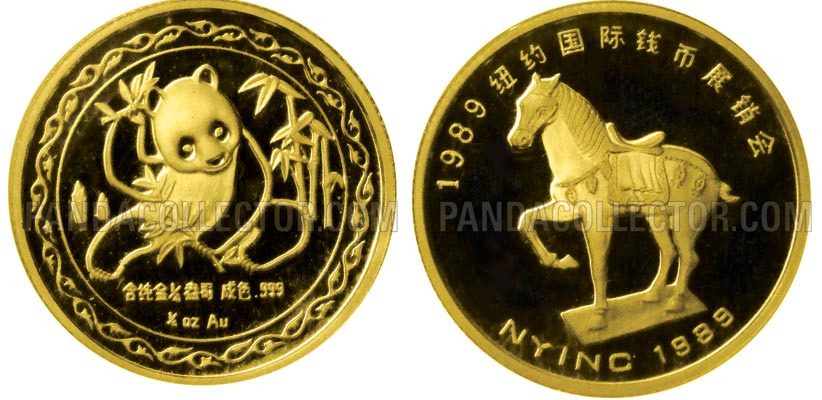
Genuine medal, click to enlarge
1982 - Off To A Bad Start - NEW!
1982 is a special year for Panda coins as it is the first year of issue. Unfortunately, the 1982's have been counterfeited just like so many other Pandas. Below are comparisons of a genuine 1/4 oz. gold Panda with a fake one. In particular note the pattern in the steps on the Temple of Heaven of the bogus bear – this area should be smooth and clear in a real coin. Careful examination will reveal many clues to the bad coin's true status. For instance, compare the distance on the reverse (Panda side) between the rim and the end of the bamboo branch. The fake coin is also thicker than a genuine Panda.
Click the images to enlarge.
Counterfeit gold Panda is on the RIGHT SIDE.
Photos courtesy of Greg W.
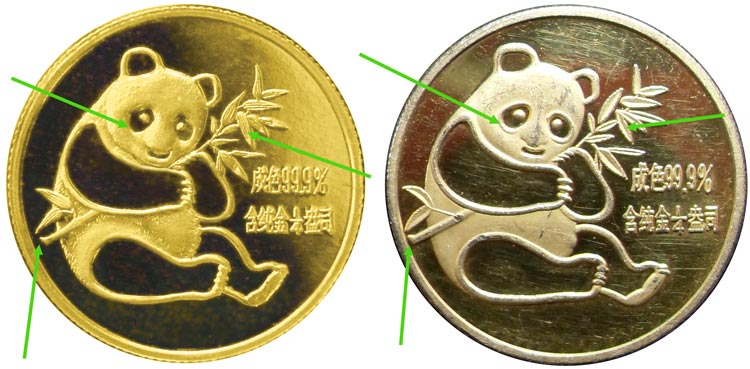
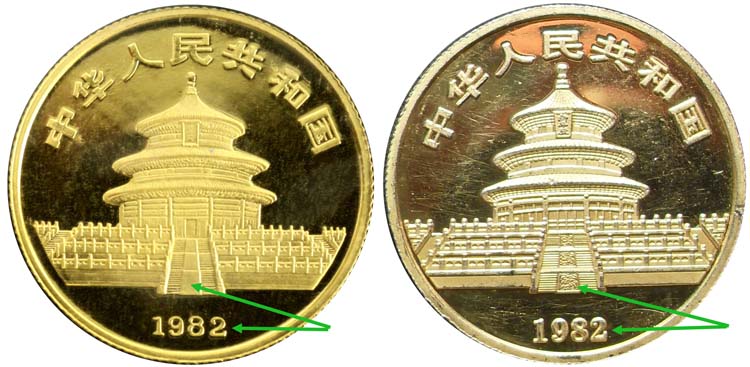
GENUINE gold Panda..........................Fake Gold Panda.
Click the images to enlarge.
2000 - Mirror, mirror on the wall,
who is the nastiest fake of all?
I don't believe I have ever seen a single fake Panda date cause as much harm as the latest counterfeit versions of the 2000 silver mirror Panda. A genuine mirror coin is quite rare and valuable, probably worth north of $500. As a result buyers are always on the alert for a coin that may have been overlooked. That has been the undoing of hundreds of collectors and dealers alike because there are dozens, perhaps hundreds of fake mirror coins for every real one. It is imperative that any prospective buyer know the differences between the fakes and the real McCoys.
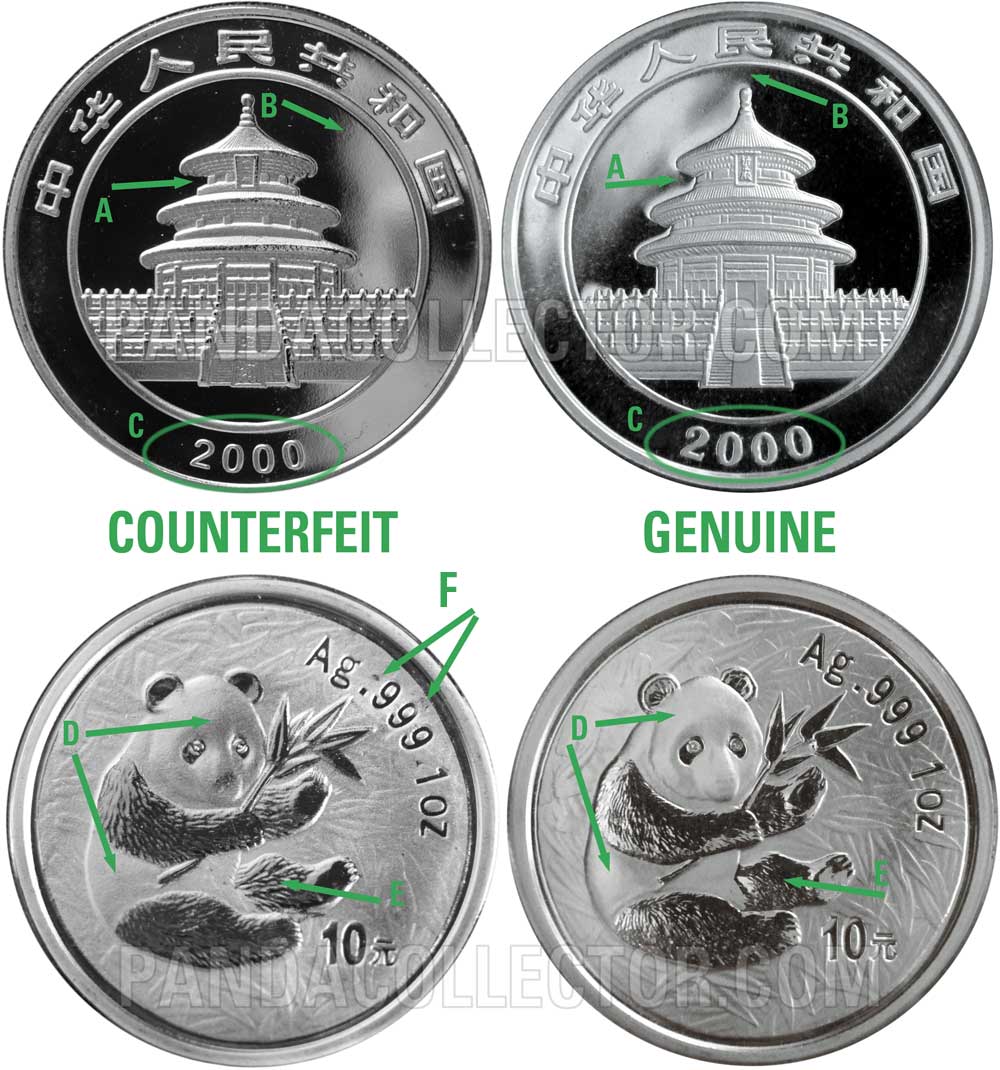
There are at least two different counterfeit 2000 mirror version on the market. Let's inspect one of them:
Click the image to enlarge.
A. The Temple is too narrow between levels
B. The texture is too rough. This can most easily be seen in highlights in the fields; there is a noticeable texture in the silver-plated coin.
C. The numerals of the date are shaped wrong
D. Once again the texture is too rough. A genuine coin has a lovely, creamy-smooth surface.
E. The hair pattern on the legs is coarser than the original's
F. The silver plating has gaps in it that leave dark spots. This is a very important indicator of a fake with these coins.Below is the second version. It has better details like the Pandas fur pattern. This version has really fooled a lot of people but it has one huge flaw that makes it easy to spot: the silver plating doesn't cover the area near the 1 oz. completely. I call this the Black Spot of Death (re: Treasure Island). If you see it you know the coin is counterfeit.
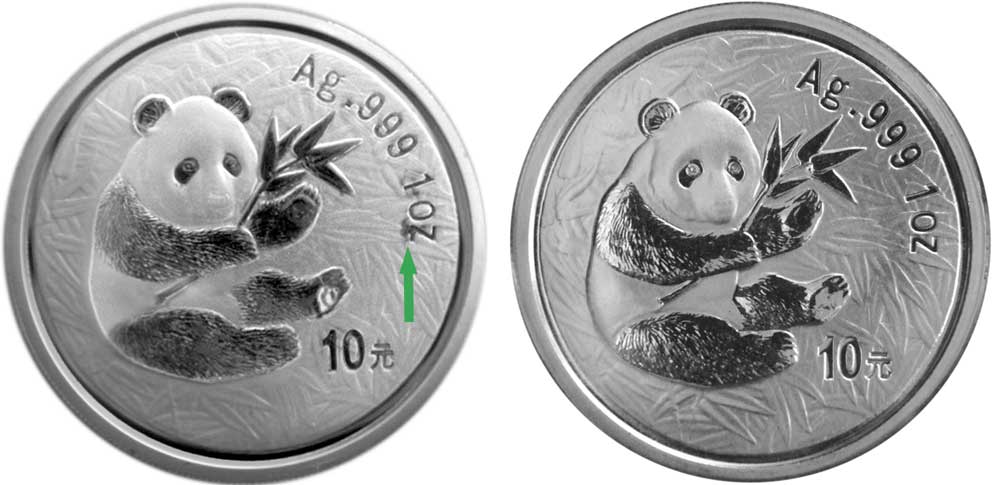
Click the image to enlarge.
1,999 Bears on a Wall,
If one of those bears should happen to fall...
Because the 1999 silver Large Date Without Serif Pandas have gained in value it is particularly important to be able to recognize the latest, improved version of silver-plated fake. Fortunately there are lots of clues if you know where to look. Let's examine the coins point by point:
A. The gap between the 10 and the edge is too narrow in the counterfeit
B. The gap between the "Ag" and the edge is too narrow in the counterfeit
C. The fur pattern on the foreleg is wrong. It is also frosted when it should be reflective.
D. The Temple is too narrow between levels
E. The texture is too rough. This can most easily be seen in highlights in the fields; there is a noticeable texture in the silver-plated coin.
F. The numbers in 1999 are spaced too closely together
Click the images to enlarge.
Counterfeit silver Panda is on top.
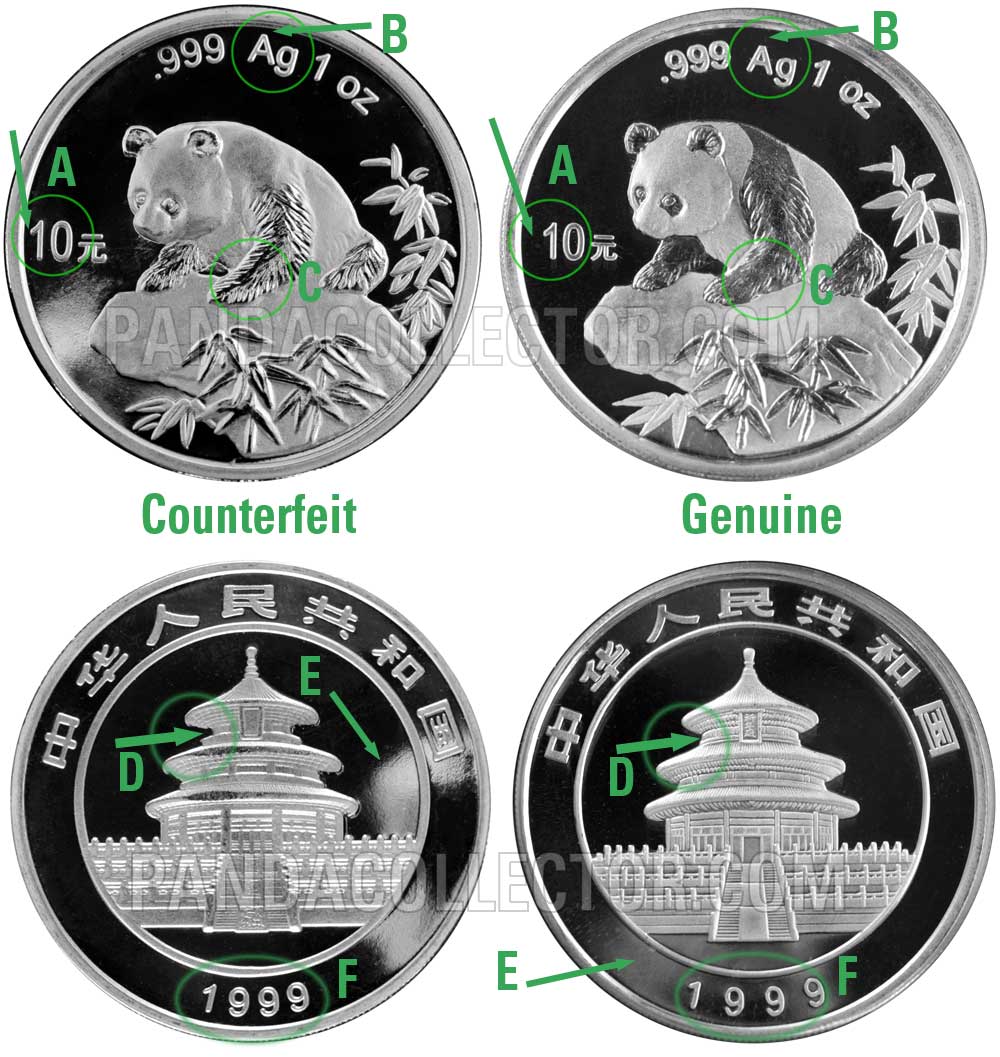
These six check points make detecting a counterfeit coin fairly easy. If even one element is wrong, avoid the coin. Remember though, there are three different genuine varieties of 1999 Pandas: Large Date Without Serif, Large Date With Serif and Small Date. Point F only refers to Large Date Without Serif Pandas; the other two genuine Pandas have different looking dates.
To see the differences more clearly, please click on the photo above.
There are a number of elements that give away this counterfeit 2003 1 oz. silver Panda. The coin lacks the razor sharp details of the real McCoy. Closely examine the circled area on the left leg and see how blurry the fur is compared to the original coin's sharp, well defined pattern.
Click the images to enlarge.
Counterfeit silver Panda is on top.
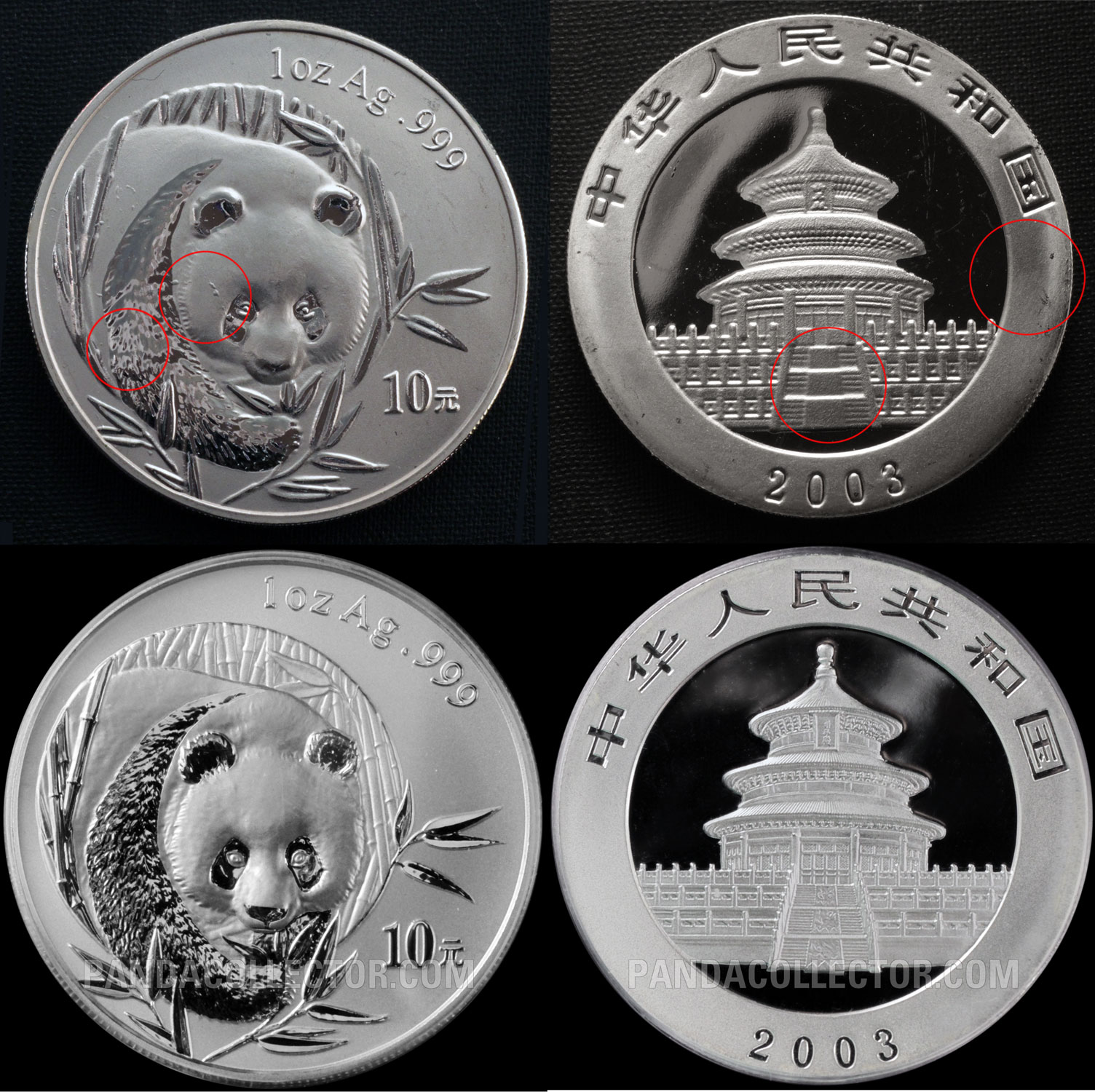
GENUINE silver Panda is on the bottom.
Then there are those bumps on the head and body. Bumps? Maybe somebody chucked a few rocks at this impostor. Never buy a bear with bumps!
Next, flip the coin over and compare the fake's crude Temple design to the elegant original. Above all notice how grainy and unpleasant the bogus bear's surface is. The authentic coin gleems in satiny splendor. To see the differences more clearly, please click on the photo.
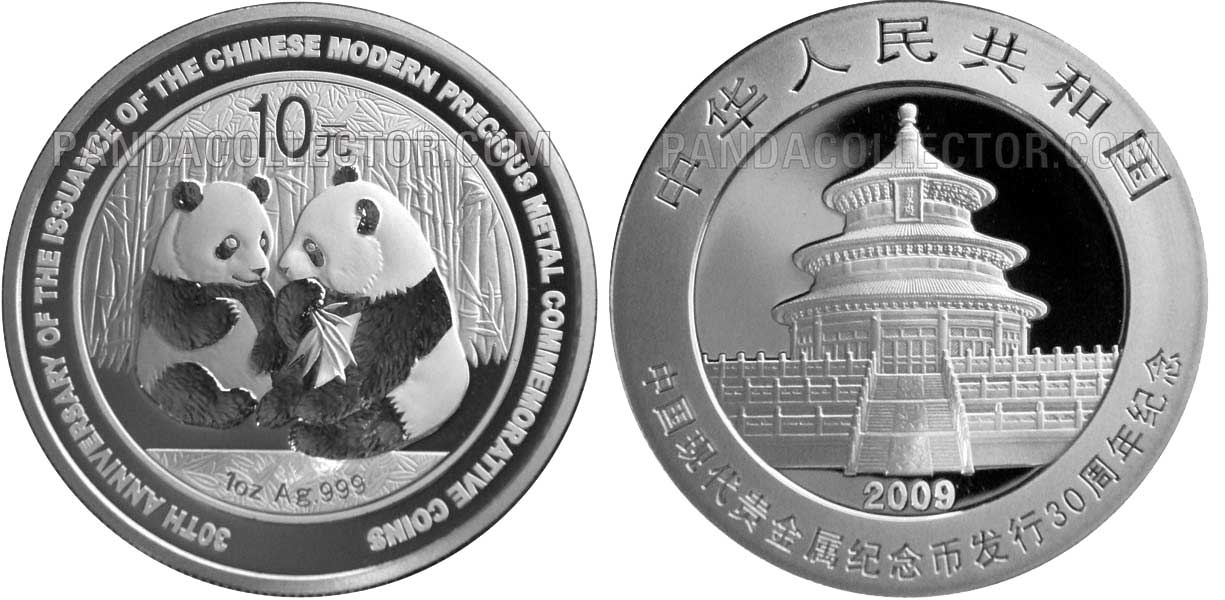
A counterfeit 10 Yuan silver 2009 30th Anniversary Panda has turned up in China — just in time for Halloween. Here is a link to see the fake coin. Below are photos of a GENUINE 39th Anniversary silver coin. In particular note the differences in details of the fur and the carpet on the Temple steps between the two coins.
Click the images to enlarge.
Images of GENUINE silver Pandas. Click this link to see fake version.
A curious group of counterfeit Pandas has appeared from Malaysia. These feature a mix of designs from different years and even from different coin series. JustAsking has kindly provided two examples of these new fakes. The first coin uses a reverse design similar to that of a genuine 2001 or 2002 Panda (which, incidentally, are the only two Panda years that share the same design). Besides being a cheap imitation of the original design (look at the lack of fur detail on the leg) the impostor gets the denomination wrong. A 50 Yuan silver coin should contain 5 oz. of silver but this coin is a one oz. size.
Click the images to enlarge.
Mismatched denomination on left
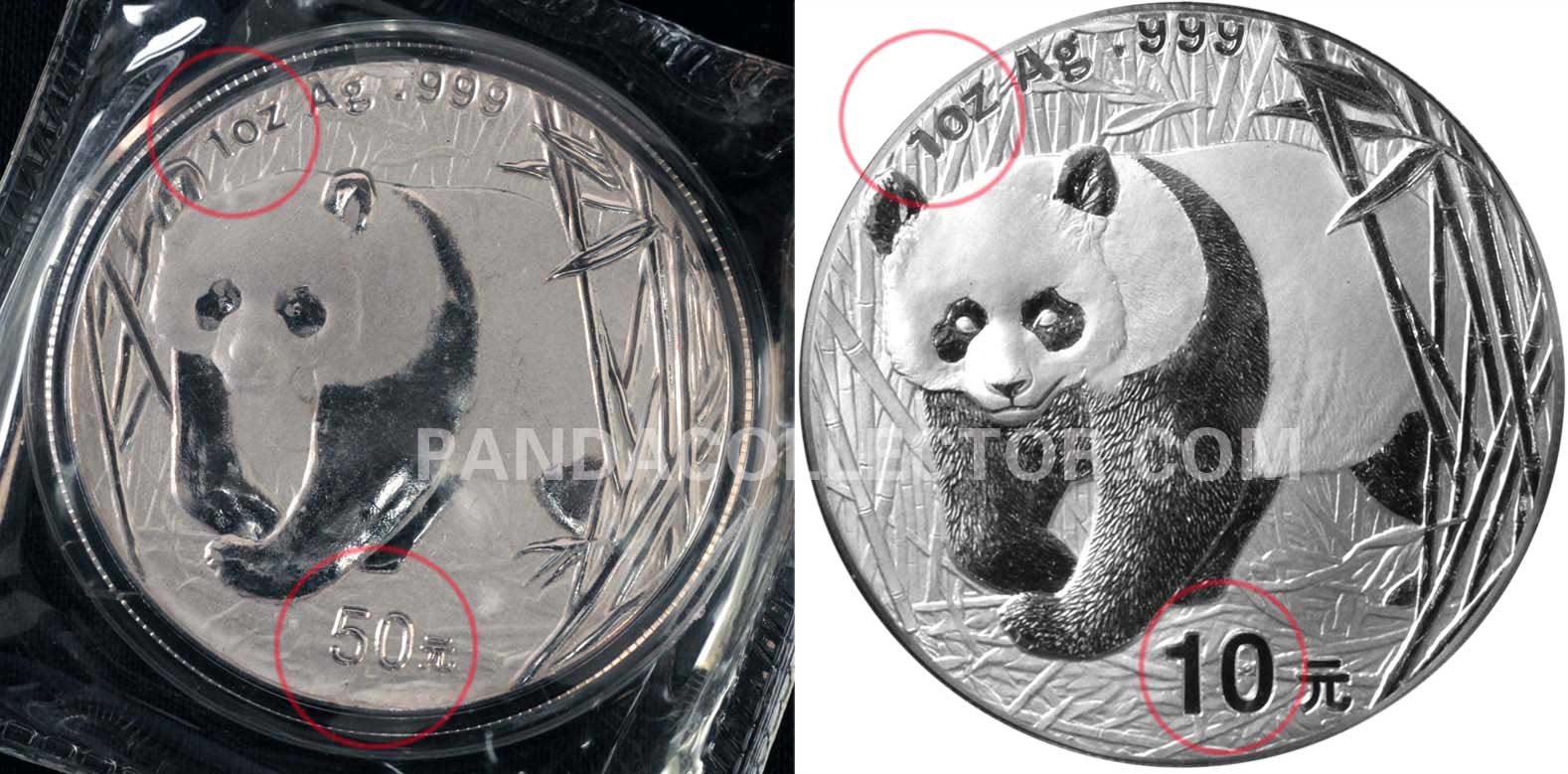
Fake coin is on left. Correct design for 2001 and 2002 Panda is on right
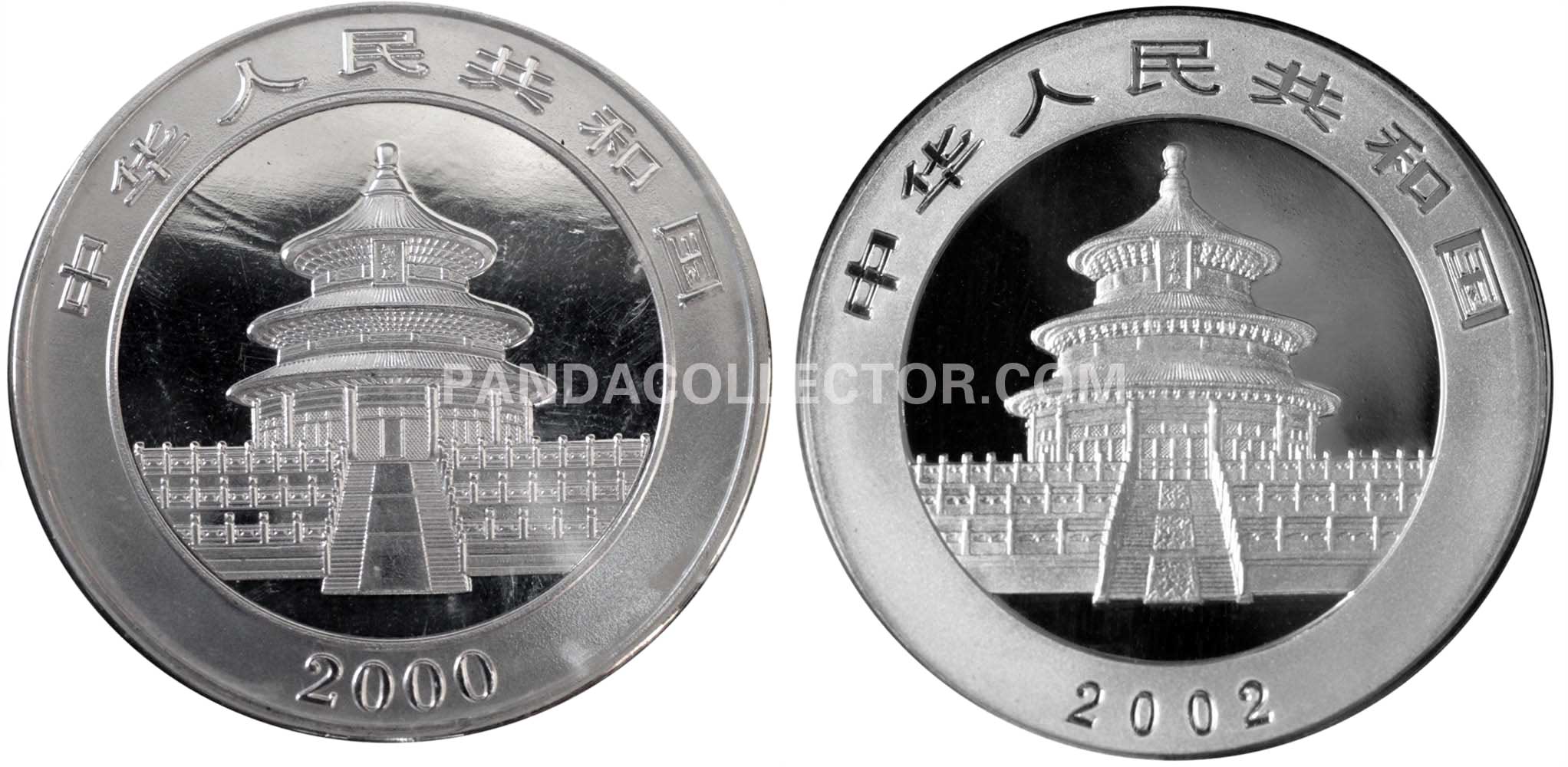
Another important aspect of these counterfeits is that as they are composed of a silver-plated base metal. Due to their ersatz composition these bogus bears display the wrong luster for a silver Panda. A true silver coin, like a Panda, has a brightness to it that is a pleasure to see. By comparison the silver-plated copy looks dark and lifeless. Anyone who plans to spend money on silver Pandas should become familiar with this difference. Once a collector recognizes this quality he or she can usually spot a fake Panda on sight. The details of the design can then be used to confirm a first impression of whether a coin is authentic, or not.
The error becomes almost comical when the obverse side copies the design of a year 2000 coin instead of a 2001 or 2002.
Design on left does not match year or coin series on right
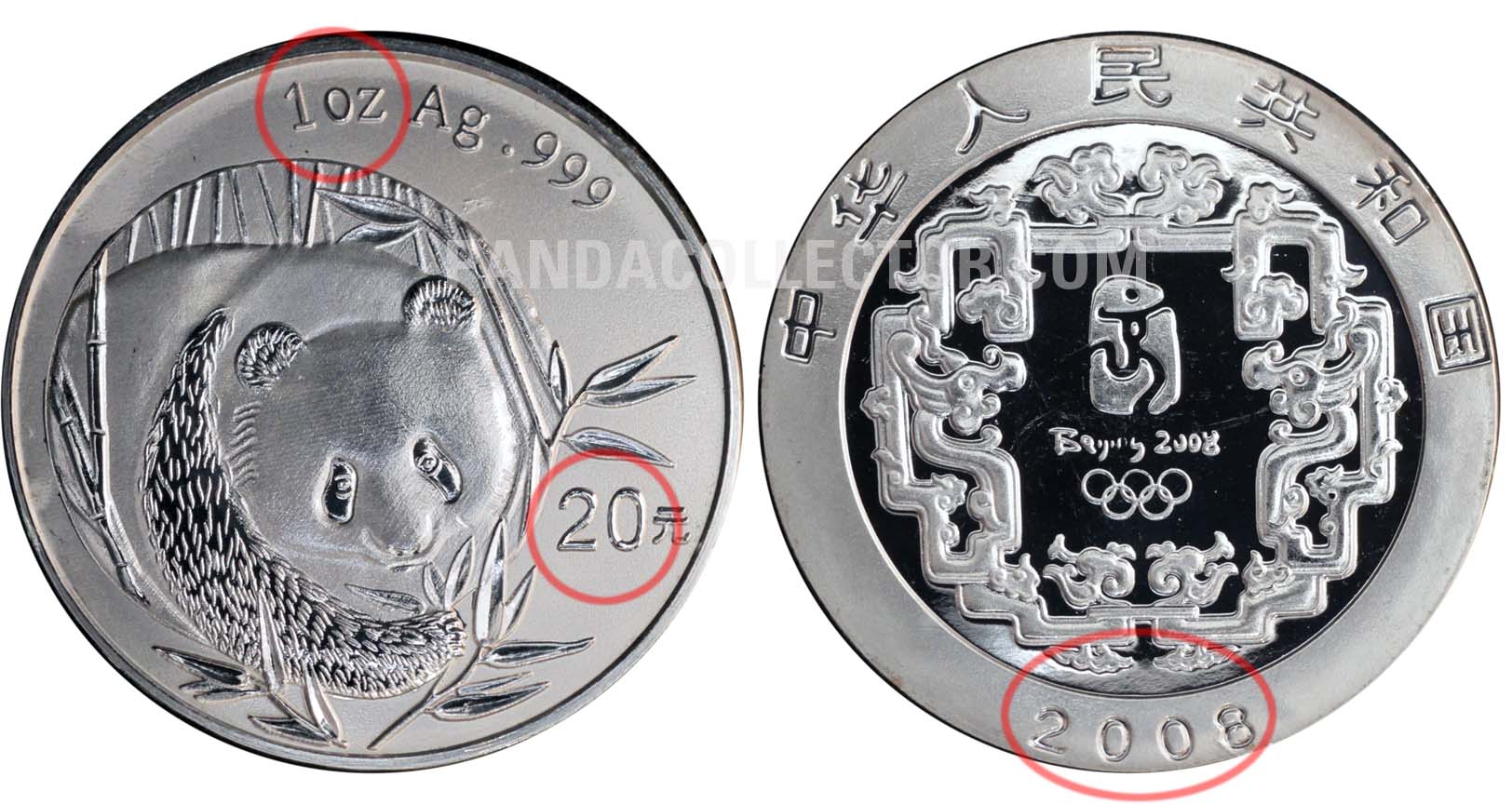
The next counterfeit dabbles in numismatic cross-pollination. On the reverse side is a copy of the 2003 Panda design that sports a totally fantastic denomination of 20 Yuan (no genuine silver Panda exists with this value). All one oz. silver Pandas are valued at 10 Yuan.
Genuine 2003 silver 1 oz. Panda coin
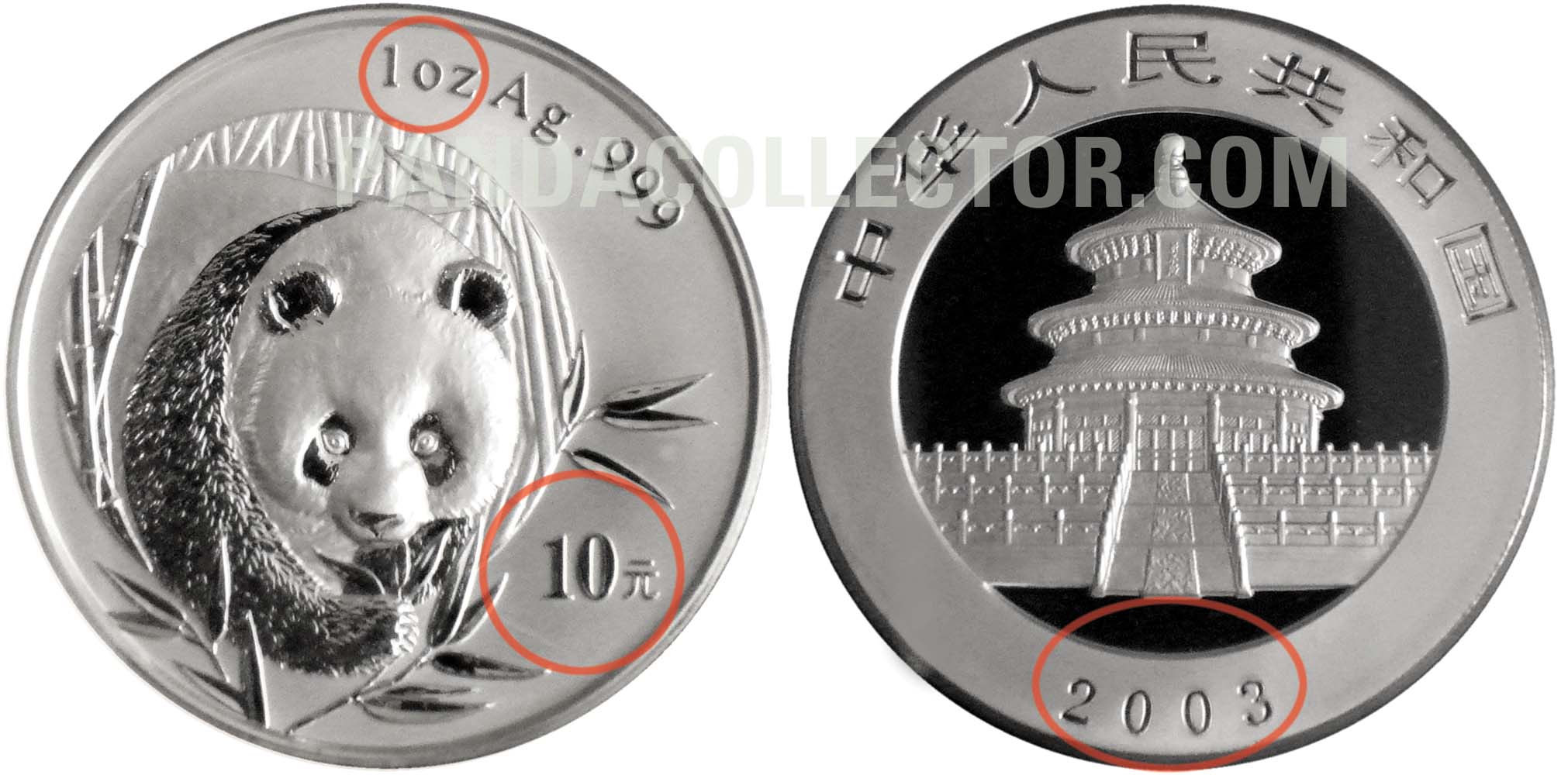
The obverse goes one step further into the world of make-believe with an image from a 2008 Beijing Olympics coin. In numismatics a coin that combines designs from different years is called a mule. Like a mule, facts are stubborn things and nothing can turn a fake Panda into a real one. This coin has to be one of the more amusing fakes around; just don't pay real money for it. Incidentally, the fake weighs 29.8 grams vs. the correct 31.1 for a real one Troy Oz. silver coin. Top
1990 - How to Spot a Fake Panda
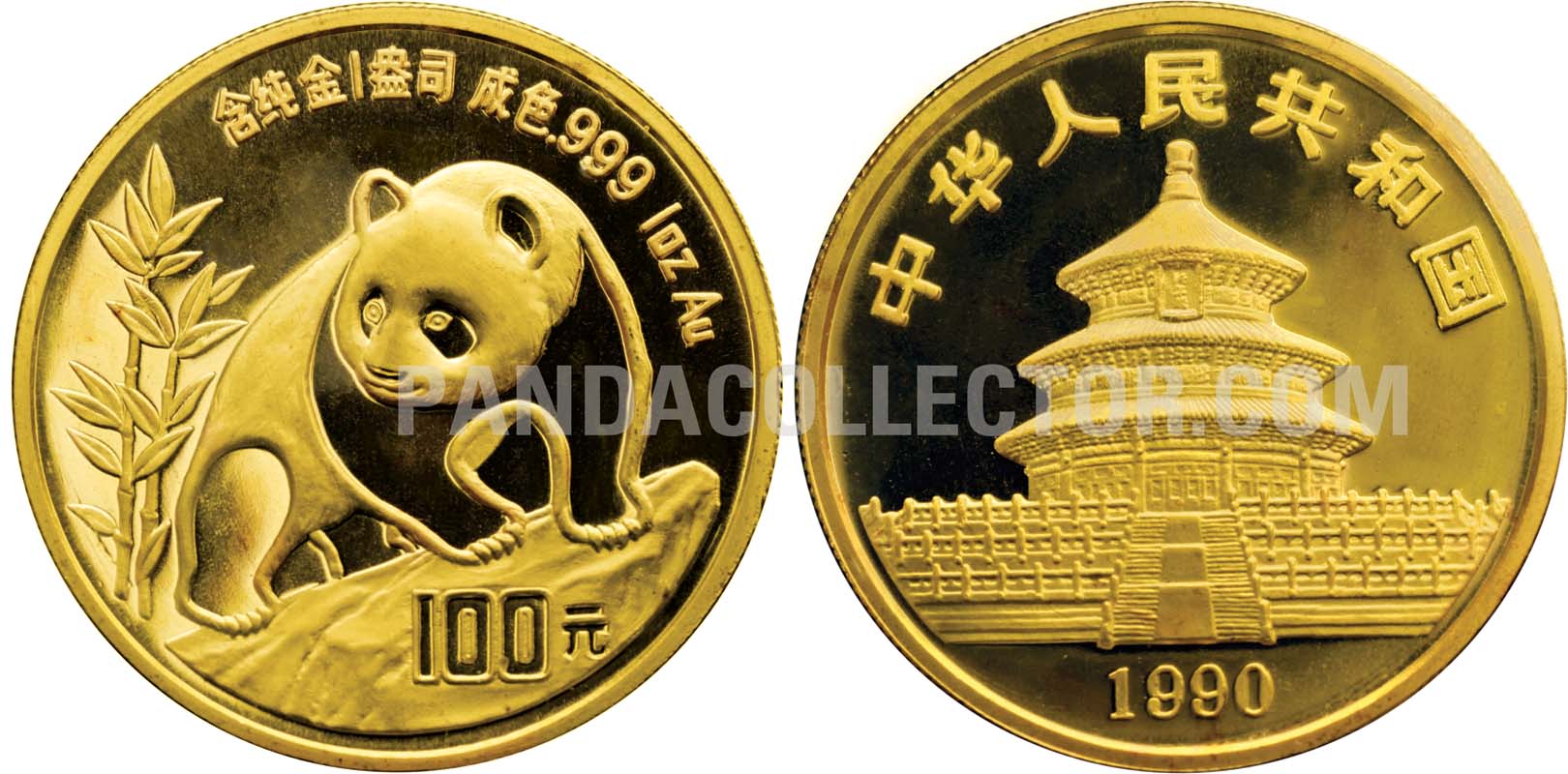
One of the more frequent errors that bungling counterfeiters make with Pandas is to mix up designs from different years on the same coin. The format of the Temple of Heaven side (obverse) of Pandas changes every few years. Here is an example of a counterfeit with mismatched sides:
Mismatched Panda designs
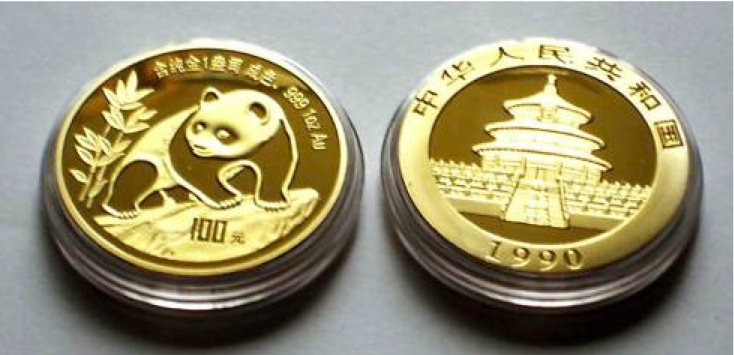
An entire gallery of correct 1 oz. gold Pandas is on the Gold Pandas page. If you mouse over the coin image the hidden side will appear. Among the earlier years pay attention to the placement of the two stairways on the side. Spotting a fake is very easy if the wrong Temple format is used. Unfortunately, people keep bidding on fakes and wasting their money. Top
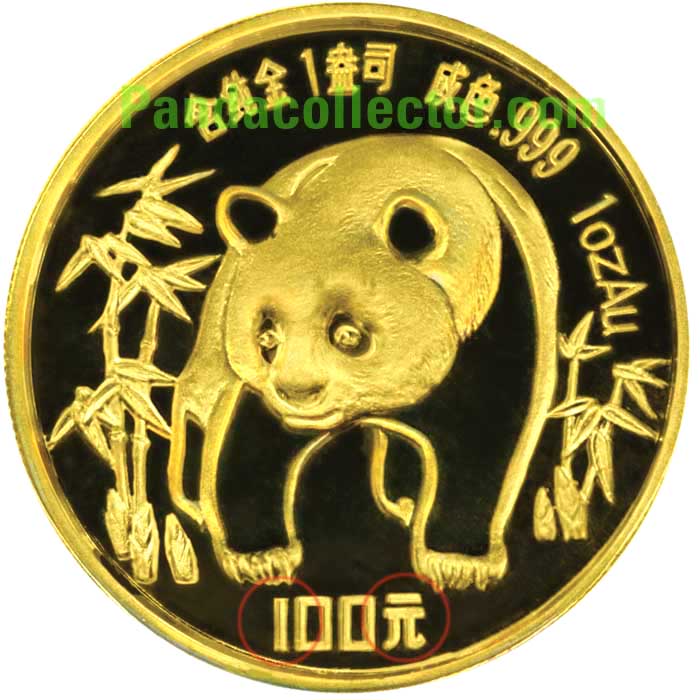
Genuine 1990 100 Yuan gold Panda
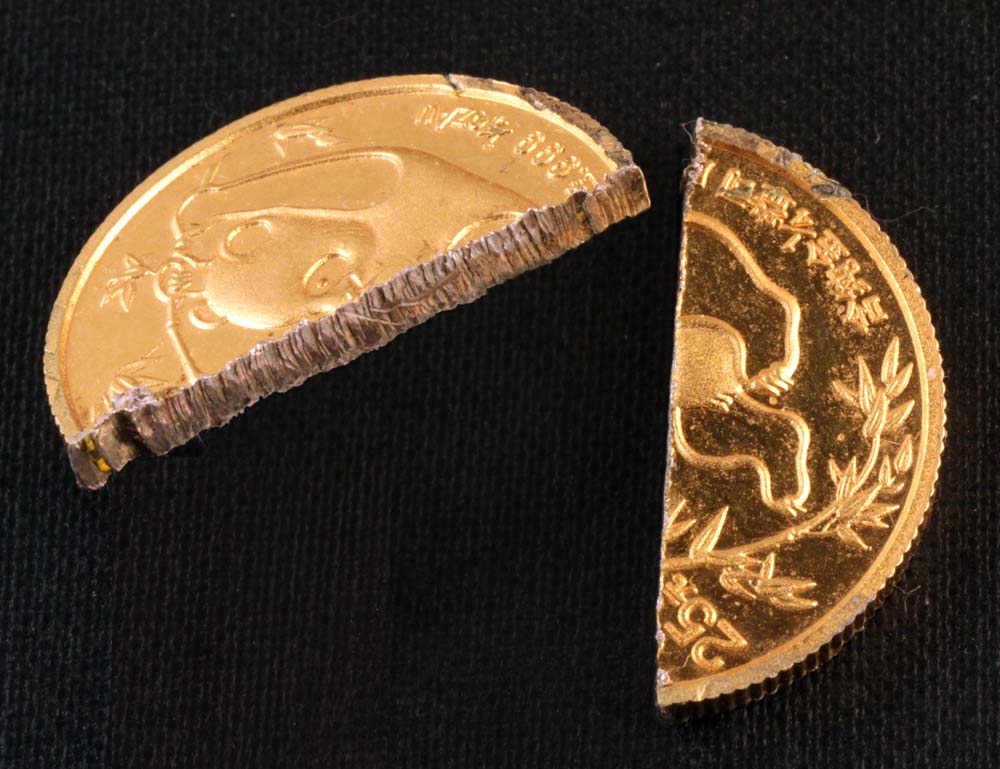
A generous reader (thanks Dean!) has loaned me a pair of fake 1/4 oz. gold Pandas. The dates are 1984 and 1985. As countefeits go, these are reasonably well-made but their true identities are quickly exposed when compared to a genuine Panda coin. Below is a comparison of the reverse side of the 1984. Two aspects to pay attention to: the bogus bear has a much rougher surface texture and much larger lettering than the real thing.
Click the images to enlarge.
Counterfeit •••••• •• • •• •• •• •••••Genuine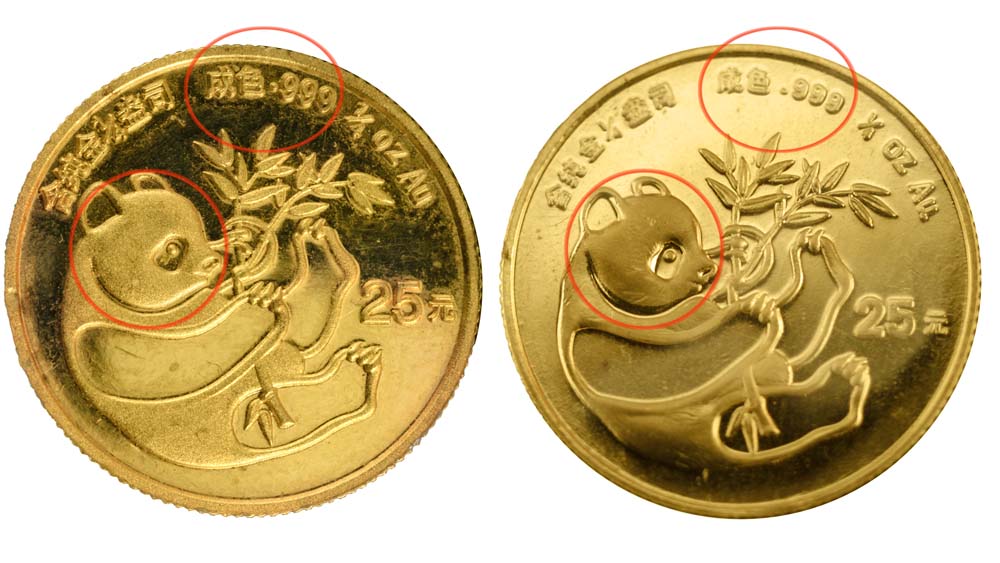
A true 1/4 oz. of gold weighs 7.775 grams. The weight of the counterfeit (7.7 grams) is probably close enough to deceive some into thinking it is made of gold. NOT!!! Take a look at the photo of the cut-in-half phony 1985 coin; it's obviously just gold plated. These coins are good examples of why it is important to pay attention to the design details as well as weight. Top
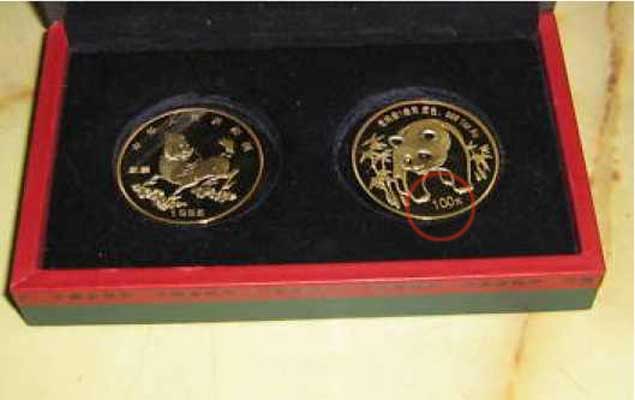
The coins in this photo of item 220649859128 are not being sold as genuine. Unfortunately, the seller thought they were when he/she purchased them in China. The weight of the coins is close to correct at 31 grams but the seller states the diameter is slightly off. Is there anything in this small photo that confirms these coins are fakes? Yes, there is. Look closely on the Panda at the shape of the 1 in 100 — it shouldn't have a serif at the top. Also, the size of the Yuan symbol is too small compared to the numerals, they are supposed to be the same height. See the image of an authentic coin below. Top
Click the image to enlarge.
counterfeit
Genuine
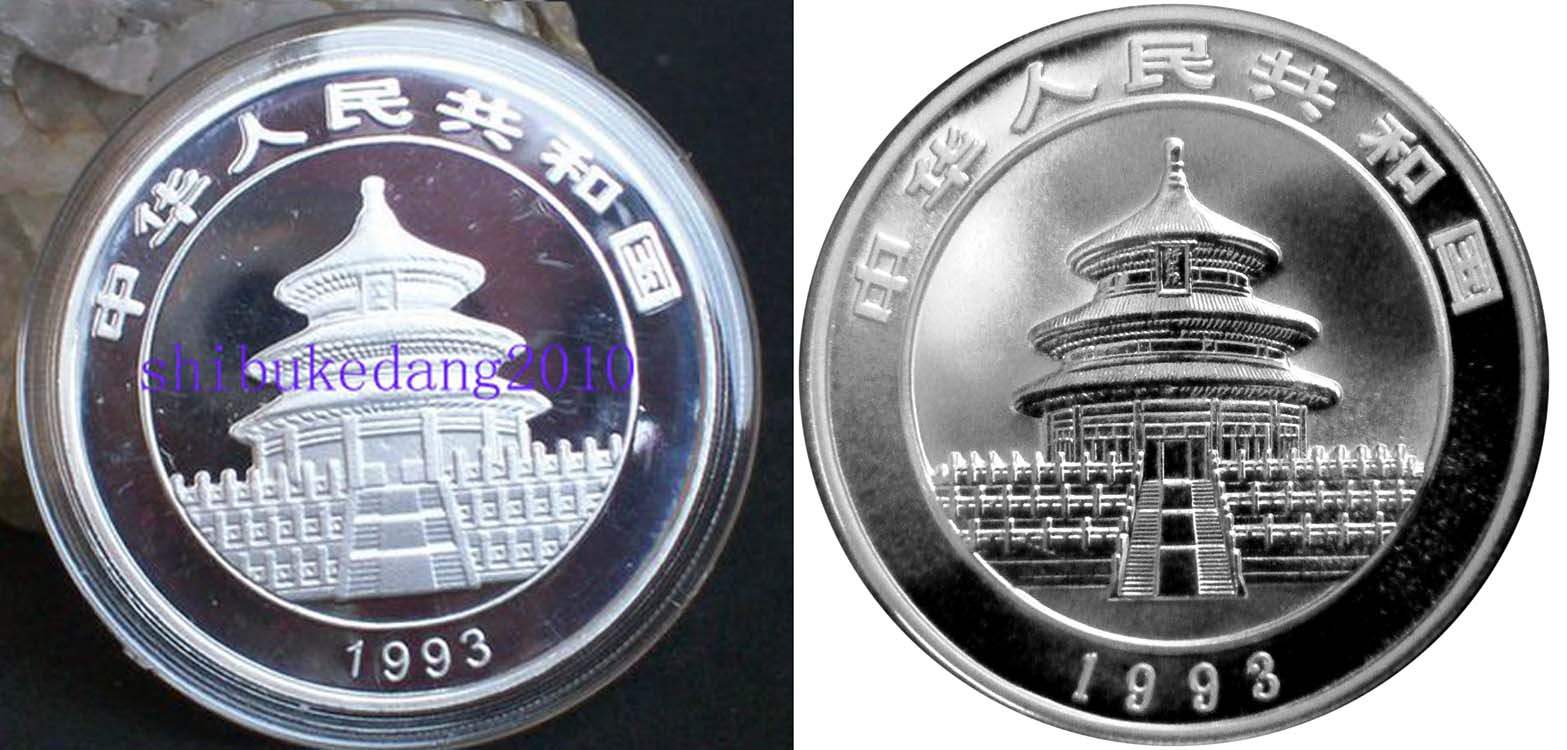
The photo on the left from item 110572201700 is of a counterfeit coin. The photo on the right is of a genuine Panda. Note the different details in the Temple and the shape of the date. Top
Click the images to enlarge.
Counterfeit •••••• •• • •• •• •• •••••Genuine
Take a look at this 1997 1 kg. gold Panda sale on eBay. The coin in question contains $38,500 of gold yet was snapped up for $25,000. Any legitimate gold dealer will pay roughly the melt value for it 24/7, which is way more than $25,000. It's possible for someone with a rare coin to be in a rush to sell, so they discount the price to less than market value. If that rare coin, though, can be melted for $38,000+ than there are always buyers who would pay close to its melt value.
So if a $25,000 price is not ridiculous enough, the seller – appropriately named cheetah (ha, ha) – is now trying to sell three more of these for $65,000 apiece. The total mintage is just 58, by the way. Even the photo cheetah is using has appeared before in someone else's auction. Look at this listing by aldergold, who used the same image a week earlier.
For this writer, at least, Mr. Cheetah needs to post photos of all the Certificates of Authenticity along with the matching numbers stamped on the coins before his/her auction can be taken seriously. Otherwise it looks like a very big scam to me.
Please always remember, too, if something is too good to be true it probably is. $38,000 of pure gold for $25,000?
Followup: eBay has removed Cheetah's 1997 1 kg. gold Panda auctions. Top
SPECIAL ALERT 2: Fake 2010 Gold Pandas + 1987
Followup to July 17. The surge of Chinese sellers of counterfeit gold and silver Pandas on eBay is nearly impossible to keep up with. An example is haochuntian2009 who is selling a 1/10 oz. gold Panda. haochuntian2009's feedback is -1 and it reads, "All of this seller's items are counterfeit, do not bid!"
If you are considering ordering from China, look at how long the seller has been in business. Ask yourself if the price makes sense. For instance, more than 60 eBayers bought a purported 1/10 oz. gold Panda last week for $86.00. A genuine 1/10 oz. gold coin has to sell for at least $119 because that is how much gold is in it (at today's gold price). Items that are offered for sale at less than their intrinsic value are pretty well guaranteed to be – fake!
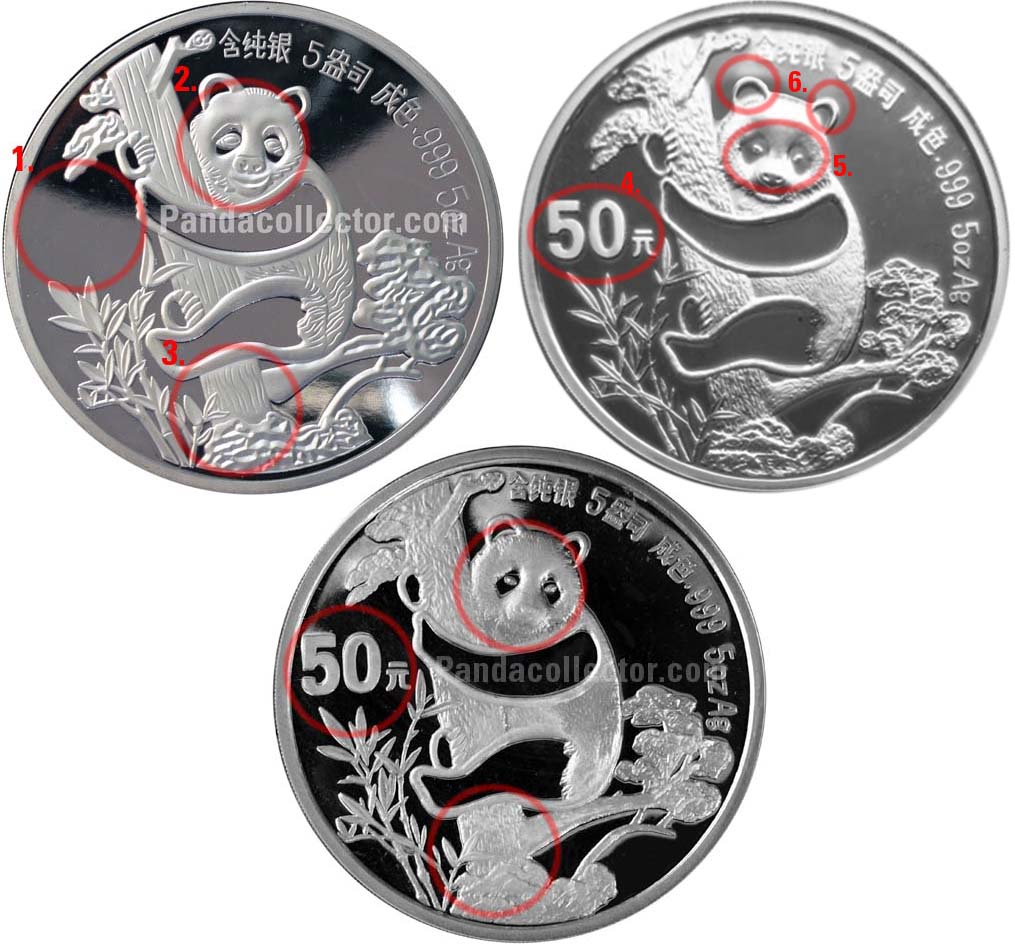
Speaking of good bears and bad, here are some new photos of fake 1987 5 oz. silver Pandas together with an authentic China Mint product. The biggest giveaway that the coin on the top left is counterfeit is that it doesn't have a denomination. If you compare it with the genuine Panda you will soon find many other differences as well. They both weigh 155.5 grams but what gives the counterfeit away as not being composed of silver is that it is thicker than the 5mm deep genuine article. A second, more deceptive fake is on the right.
Click the images to enlarge.
Counterfeit •••••• •• • •• •• •• •••••Counterfeit
Genuine
1987 5 oz. silver 50 Yuan Panda coin
Notice (1) the missing denomination (2) the cartoon-like face (3) the crudely drawn textures of the fake (4) the shape of the numerals (5) the width and shape of the eyes and eye sockets (6) the shape of the ears. Top
SPECIAL ALERT: Fake 2010 Gold Pandas
The eBay sellers colorful8876 and updang1 (possibly the same person or organization) are now selling 1/10 and 1/20 oz. 2010 gold Pandas. These same sellers have sold hundreds of presumably counterfeit silver Pandas to unwary eBay customers over the last month. (I say presumably because the photos were of fake coins, but I am still waiting for a shipment to arrive so that I can inspect the actual coins). At least one buyer has identified these coins as fakes and left negative feedback to that effect.
Over $3,000 of "gold" coins have been sold by these sellers in less than 24 hours. If the coins are fake they will be composed of copper or a base metal alloy that is plated with a thin layer of gold. Their intrinsic value will be just pennies.
Unlike the silver Pandas, the coin photos of these new items appear to be of genuine coins. The photos are linked to a Chinese social networking website, so their source is murky. I strongly advise eBayers to consider this information before buying from colorful8876 and updang1. Top
No Face Value, No Good
One of the surest and easiest tests of the authenticity of a Panda coin is to look for a face value, or denomination. No face value, no good sums up the situation. The only exceptions are medals struck for specific coin exhibitions and 1982 gold Pandas. Here is a silver fantasy Panda. It's not strictly a counterfeit because it doesn't copy a real coin but it could deceive an unwary buyer into thinking it's an actual legal Panda.
This silver "coin" borrows the motif from a 1987 12 oz. gold Panda and puts it on a piece marked 12 oz. of silver. Among the things wrong with it is that no 12 oz. silver Pandas struck in 1987 and this design was never used for any other year. Plus it has no face value. Is it actually made out of silver? Only a physical test of the actual item can answer that question. Top
Click the images to enlarge.
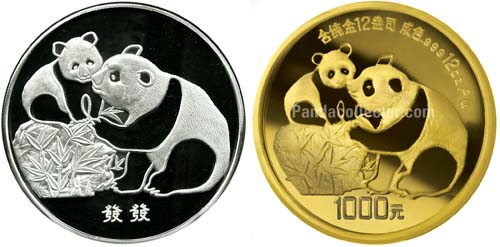
Copy •••••• •• • •••• •• •• •• •••••Genuine
A Blizzard of Bogus Silver Bears!
A large quantity of Panda imposters hit eBay yesterday. I listed the item numbers of the ones I found on the Chinese Coin Forum. Here is a side-by-side photo of a couple of these bogus bears and a genuine Panda. I'll post photos of the other dates as time permits.
Click the images to enlarge.
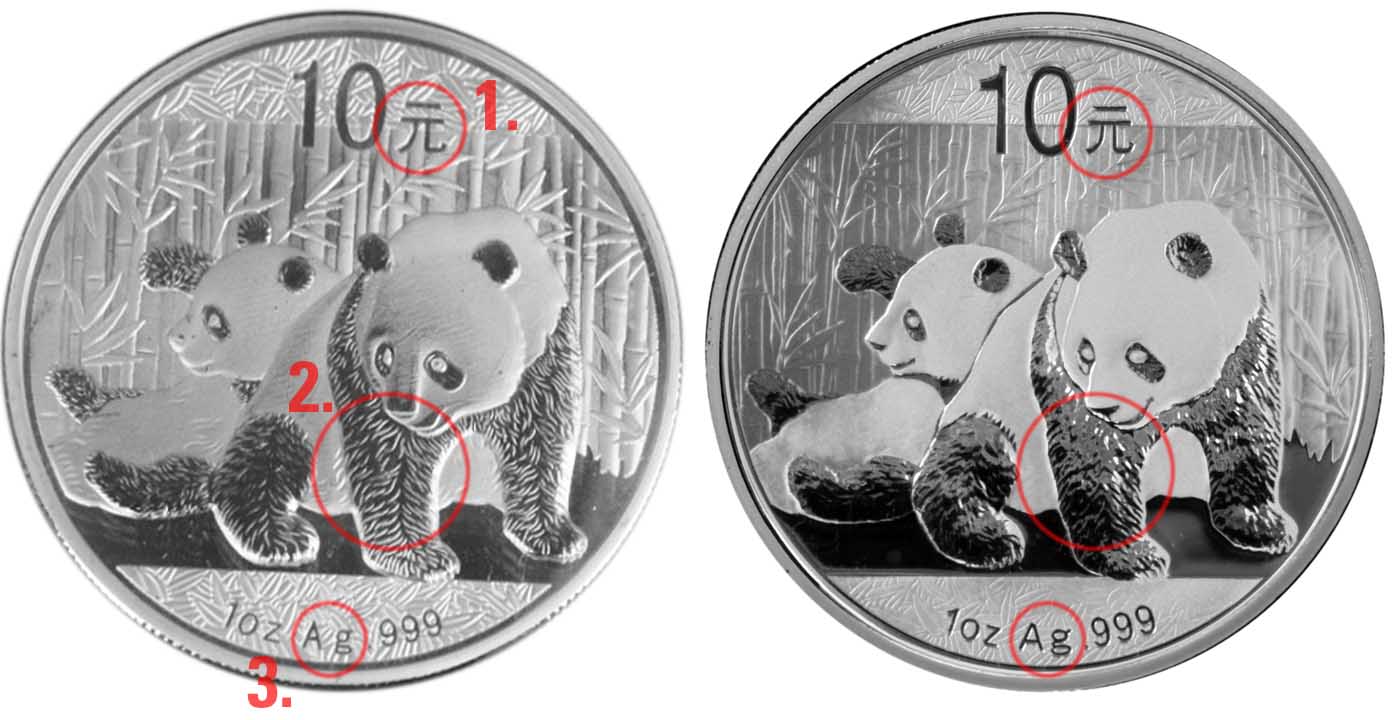
Counterfeit •••••• •• • •• •• •• •••••Genuine
2010 1 oz. silver 10 Yuan Panda coin
Notice (1) how high up the Yuan symbol on the counterfeit is, (2) the textures in the fur and (3) the gap between the letters.
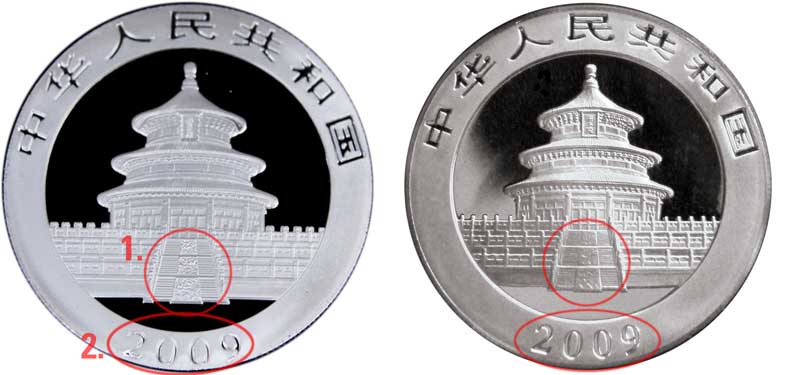 .
.
Counterfeit •••••• •• • •• •• •• •••••Genuine
2009 1 oz. silver 10 Yuan Panda coin
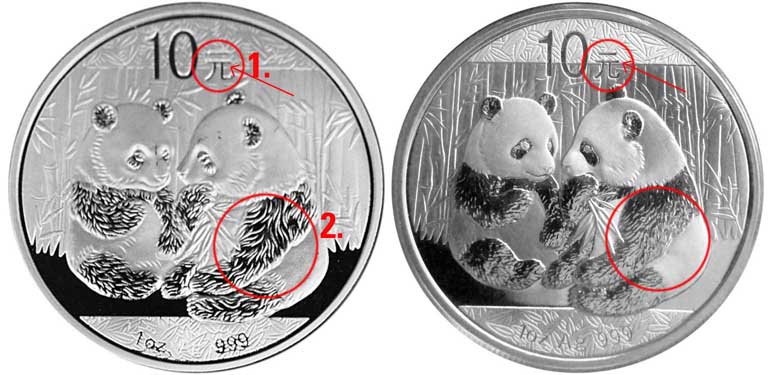
Counterfeit •••••• •• • •• •• •• •••••Genuine
2009 1 oz. silver 10 Yuan Panda coin
See: (1) The location of the Yuan symbol (2) the textures in the fur
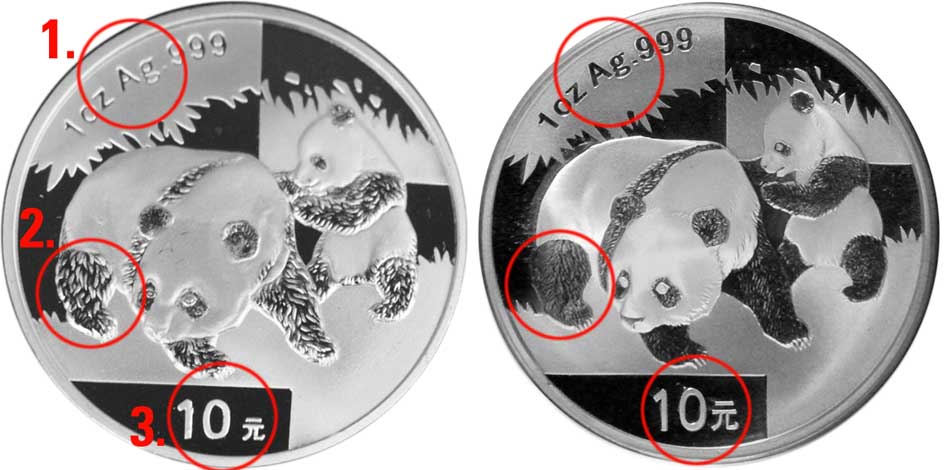
Counterfeit •••••• •• • •• •• •• •••••Genuine
2008 1 oz. silver 10 Yuan Panda coin
Compare: (1) The thickness of the lettering (2) the textures in the fur (3) The clarity of the numerals and Yuan symbol. The counterfeit is quite crude.
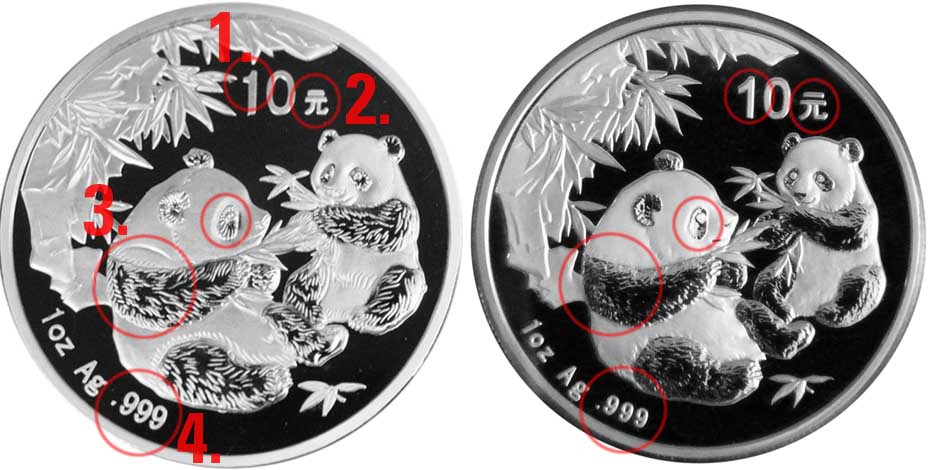
Counterfeit •••••• •• • •• •• •• •••••Genuine
2006 1 oz. silver 10 Yuan Panda coin
Compare: (1) The shape of the numeral 1 (2) the size of the Yuan symbol (3) the textures in the fur and eye (4) the size of the numerals and letters. Top
Click the images to enlarge.
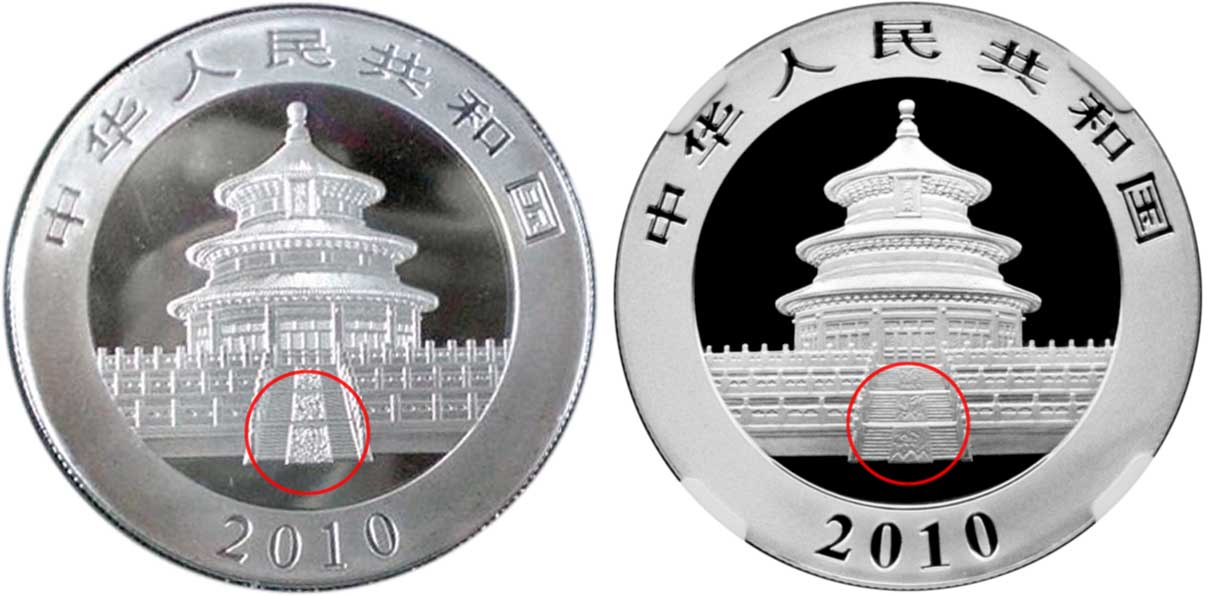
2010 Silver Pandas – I hate that rug!
Counterfeit silver Pandas are being peddled along with the gold ones. Here is what to look for: On the obverse (date) side the rug pattern is all wrong. Personally, I find this is the easiest clue to look for. On the reverse side the Yuan symbol is too high up. Top
Click the image to enlarge.
 .
.
Counterfeit •••••• •• • •• •• •• •••••Genuine
2010 1 oz. silver 10 Yuan Panda coin
2010 Gold Pandas – Don't fall for a Bad Date
As long as they are in their original pouch they are easy to identify because the rounded corners and edge pattern of the pouch gives them away. The authentic coin also has the name of the mint where it was struck (Shenzhen Guobao) impressed in the plastic. Here are photos of a fake 2010 (number 1) followed by a genuine coin (2).
Click the image to enlarge.
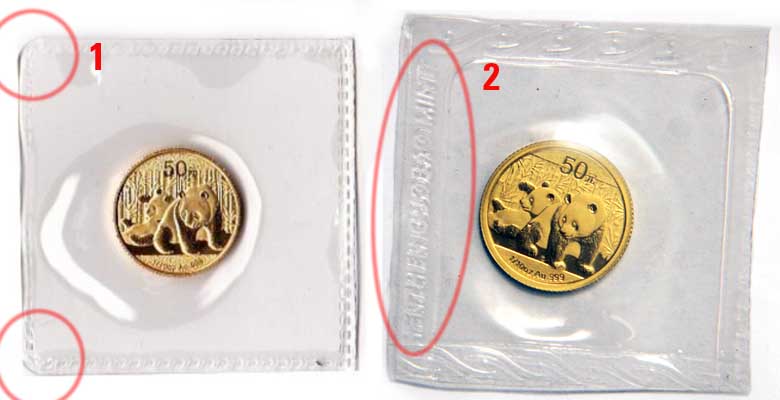
Counterfeit •••••• •• •• •• •••••Genuine
2010 1/10 oz. gold 50 Yuan Panda coin
The rounded corners test is a simple way to eliminate a lot of bogus 2010 coins. As it happens, that's the way all the bad 2010's I've seen have been presented, so this is a useful bit of knowledge I think. Until I see or hear about a fake 2010 in an apparently good pouch I'll continue to pay attention to this. Funny, too, but the counterfeiters in general (not just for the 2010s) have so far not duplicated the genuine pouches really well. You would think that should be easy, but either it isn't or the bad guys haven't paid enough attention to it up until now.
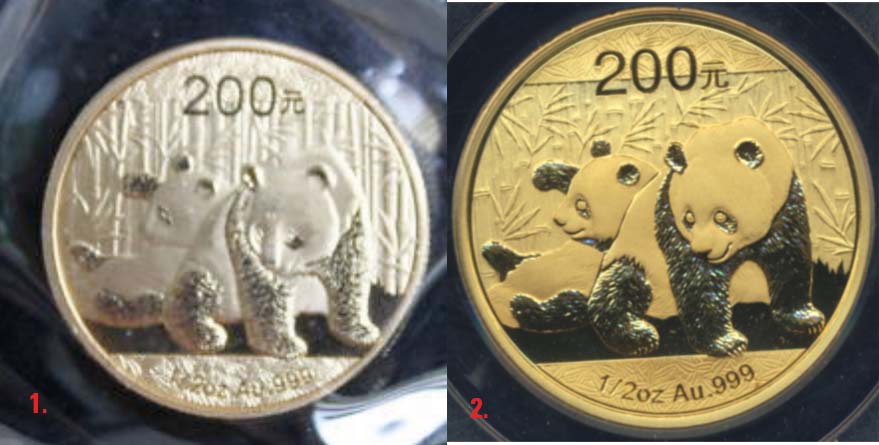
If a 2010 gold Panda is out of its pouch than a reasonable question is, why isn't a new coin sealed? In any case, I find the luster of a plated coin to be distinctly different than a real gold piece's. After looking at that I check the details anyway. Here's a comparison between a photo of the auction coin (1) and a PCGS certified coin (2). From the limited resolution image of (1) it seems to have a very different luster than (2); its surface is overly brilliant and reflects light like a plated coin. For example, look at the area below the bears and see how shiny #1 is. Among details it seems like the "2"s in 200 aren't quite a match and neither is the eye of the bear in the background. The fur on the legs also looks odd but I need to get a better look to be sure. (Hat tip to the Chinese Coin Forum). Top
Click the image to enlarge.
All that glitters isn't gold: A 2007 Panda Gold Fake
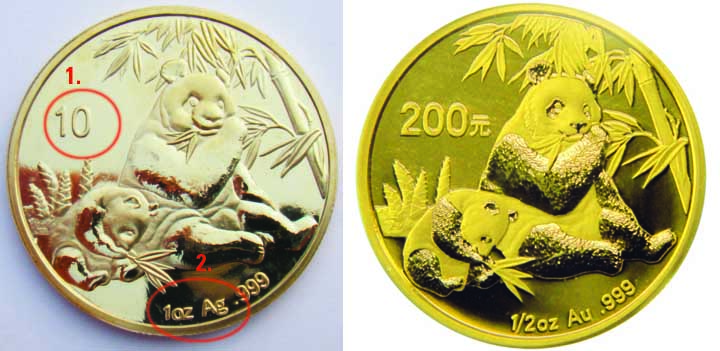
Today's special is a "1/4 oz. gold fake that is listed as "100% 999 AUTHENTIC GOLD COIN 100%". Let's take a look at it and compare it to a genuine 2007 gold Panda. Click to enlarge the image.
 .
.
Copy••••••••••••••••••••••••Genuine
2007 Panda gold coin
First off, please notice how different the luster of these two coins is. The plated coin looks like it has been waxed in the photo. For some reason plated coins frequently photograph differently than genuine gold pieces. Once you learn how to recognize this unnatural luster you can spot many fake Pandas at a glance. There are also three major giveaways in the details. Number 1: there is no denomination after the face value. Not to mention the correct value for a 2007 1/4 oz. gold Panda is 100 Yuan not 10! Number 2: A 1/4 oz. coin should state that it is 1/4 oz, not 1 oz. Plus. plus, plus Ag is the chemical symbol for SILVER not gold. A genuine gold coin will always have the symbol Au after the weight.
For the record this is eBay item 160449193393 and it comes from China, China. Hopefully it will be pulled soon. Top
More Bad Bears: 1988 5 oz. Silver 50 Yuan Panda coin
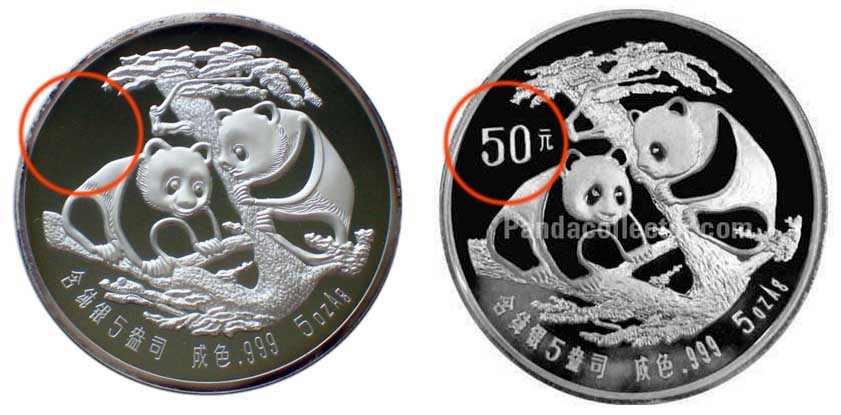
Here's an even easier imitation 1988 5 oz. silver 50 Yuan Panda coin to spot than the one from a few days ago. This poor bruin has been neutered–it hasn't any denomination. Rule NUMBER ONE in looking at Chinese Pandas is to see if there is a denomination, or face value. If this is missing than the coin is not genuine. Go ahead and weigh it, if you have the chance, because frequently the weight is lighter than what's stated. That's because it has copper in its core and copper is less dense than silver or gold, hence it weighs less for the same size.
The only two exceptions to this denomination rule are the 1982 gold Panda coins and the Panda medals. Most people know what the 1982s look like, but if you're not certain about a medal (see Fantasy Island, below) check a reference book (hint, hint) and make sure the Panda is of a kind struck by the Chinese Mint. Top
Click the image to enlarge.
Copy••••••••••••••••••••••••Genuine
1988 5 oz. silver 50 Yuan Panda coin
1988 5 oz. Silver 50 Yuan Panda coin
Seller aleexandera (see below) has put another Panda (item no. 200485231258) on eBay that is reportedly a counterfeit. Compare the foliage details and the left end of the log to a certified genuine coin to see the differences. (Hat tip to poconopenn and the Chinese Coin Forum). Top
Click the image to enlarge.
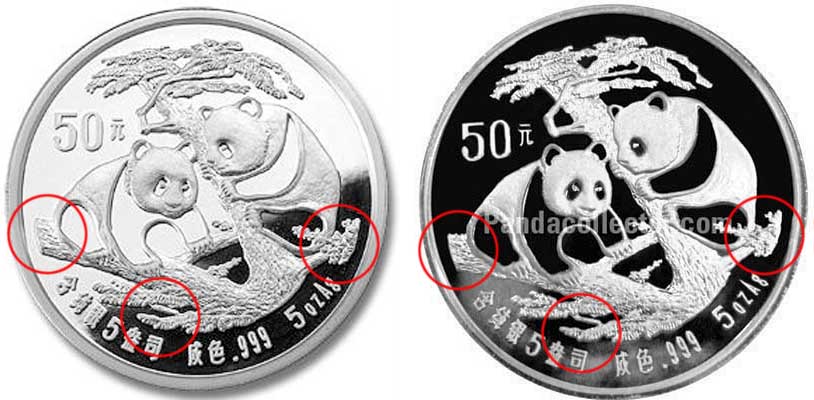
Item #200485231258•••••••••••Genuine
1988 5 oz. silver 50 Yuan Panda coin
1995 Silver Panda – True or False?
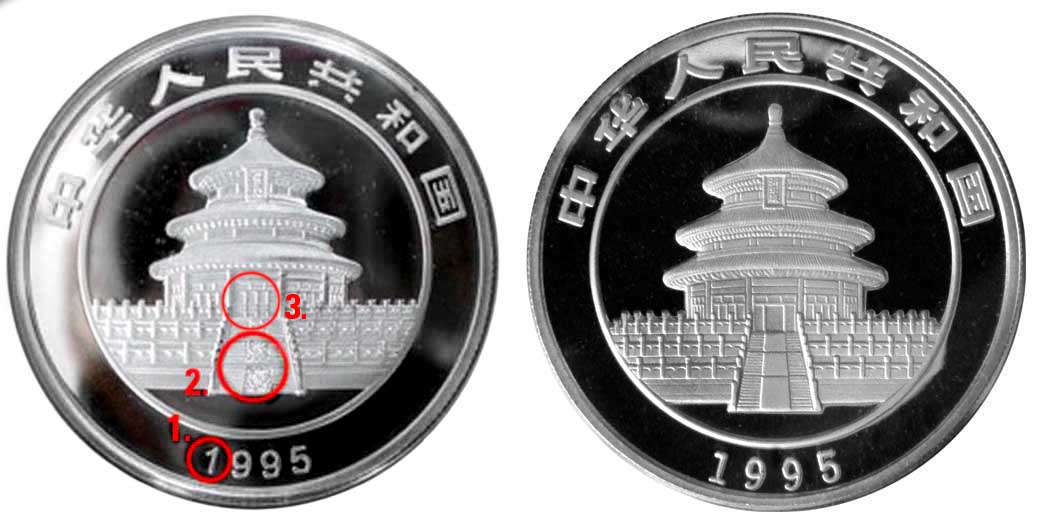
This 1995 is part of a series of Panda fakes that spans many dates. The most obvious clue to their counterfeit status is the shape of the 1 — this group always uses the type of one shown in the left photo(1). The proper design for a 1995 Large Date Panda is on the right. Incidentally, 1995 Small Date Pandas don't use this style of numerals either.
There is also an issue with the pattern in the steps. Panda coins from 1982-2001 have blank areas in the center carpet of the stairway(2) on the Temple of Heaven in Beijing. Patterns, or textures, were added in 2002 so any earlier coin with a pattern is bogus. This is a very important diagnostic detail because so many countergeits fail it. (3.) highlights the differences in the Temple door between real and counterfeit. A careful inspection of the Temple will reveal numerous other discrepancies but either these two are enough to condemn a coin as a bad, bad bear. Top
Click the image to enlarge.
Counterfeit •••••••••••••••••Genuine
1995 1oz. silver 10 Yuan Panda coin
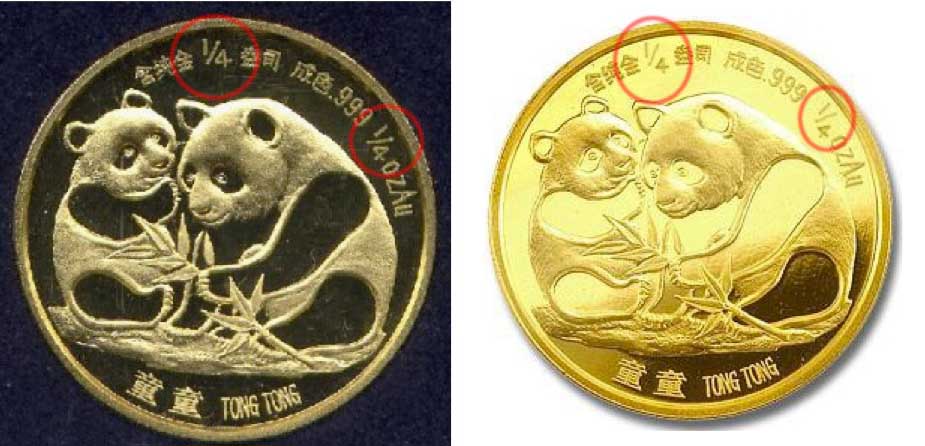
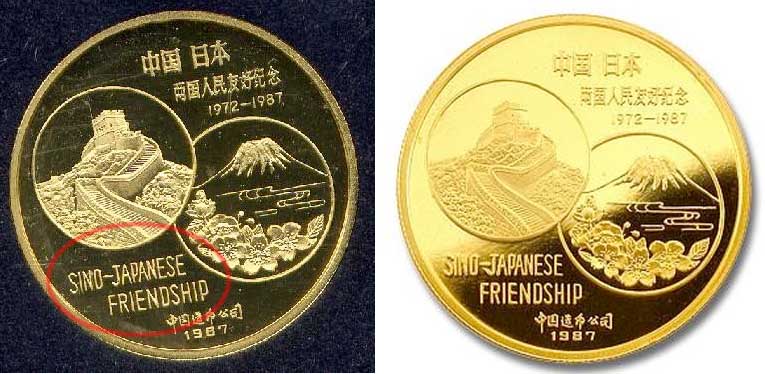
1987 1/4 oz. gold Sino-Japanese Friendship medal –
Fantasy Island
These five items (150457138337, 150457111106, 150457536674, 150457917593, 170502269104 and 170502524829) are part of the first wave of 1/4 oz Sino-Japanese Friendship medals to come to market. The very first time I came across one was just a couple of weeks ago with item #200481989085, which ended on June 13. So far, all the sellers of this medal have zero feedback. All sellers are supposedly located in the USA but when I sent a question about the weight of #200481989085 to seller aleexandera the response apparently came from China. The seller did assure me that the medal had been weighed and is the stated weight.
A further concern is that items 150457111106 and 200481989085 use the exact same photo although the sellers have different accounts. I also note differences between the first numeral "1/4" in the photos of 150457138337 and 150457111106 and it seems to me that the lettering on the date side of 200481989085 and 150457111106 is not as clean as what I see on a known genuine medal of this year.
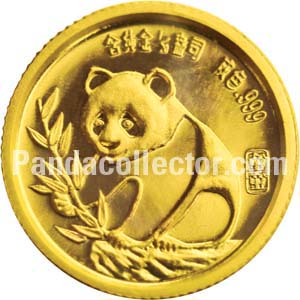
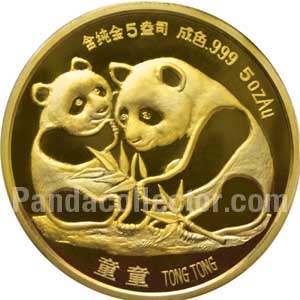
Here's the bottom line: this is a fantasy issue, an invention of the counterfeiter. This medal is meant to deceive about its origin and —most likely— about its precious metal content (although I can't confirm that without examining one). No real 1/4 oz. 1987 Sino-Japanese Friendship medal was ever minted. Medals were only struck in 1/20 oz. 1 oz. and 5 oz. gold.
click image to enlarge
Fantasy 1987 1/4 oz. medals
Genuine Sino-Japanese Friendship medals
 •
•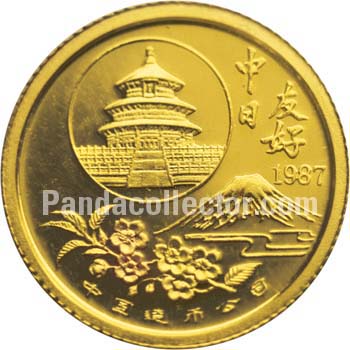
1987 1/20 oz. gold Sino-Japanese Friendship medal
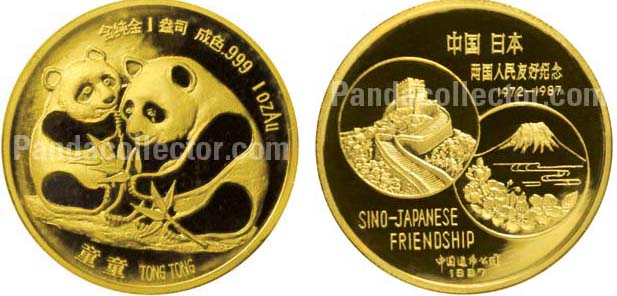
1987 1 oz. gold Sino-Japanese Friendship medal
 •
•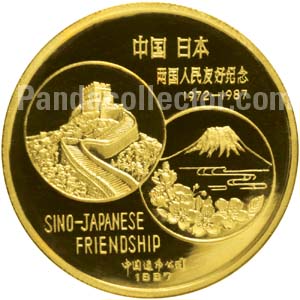
1987 5 oz. gold Sino-Japanese Friendship medal