


 _Panda Book••••••
 ••Price Guide
 Coins for Sale•• ••• •••
  Counterfeits Report•
Platinum Pandas of China
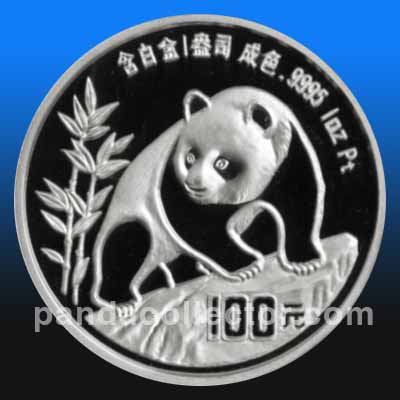
1 Oz, or 31.1 grams; Diameter = 32mm;
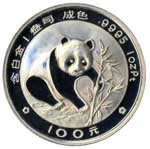
100 Yuan face value (1987-1990)
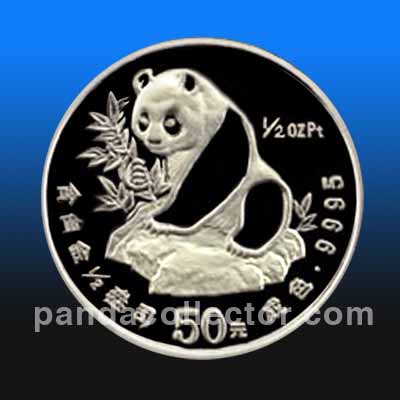
1/2 Oz, or 15.55 grams; Diameter = 27mm; 50 Yuan face value (1990)
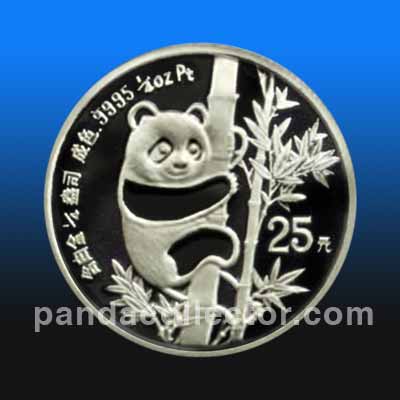
1/4 Oz, or 7.8 grams; Diameter = 22mm; 25 Yuan face value
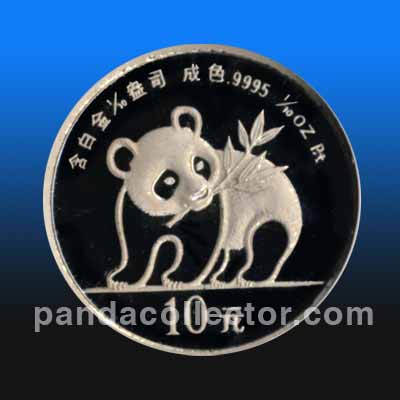
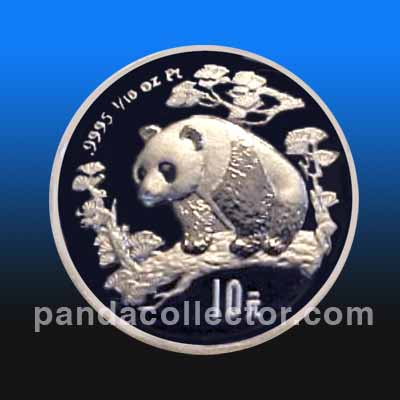
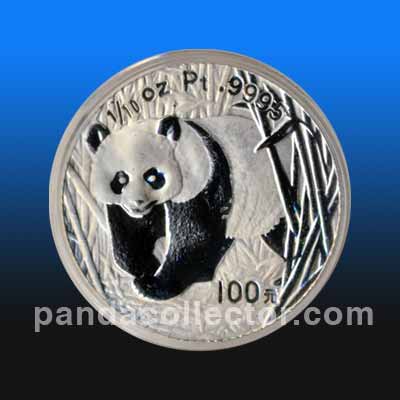
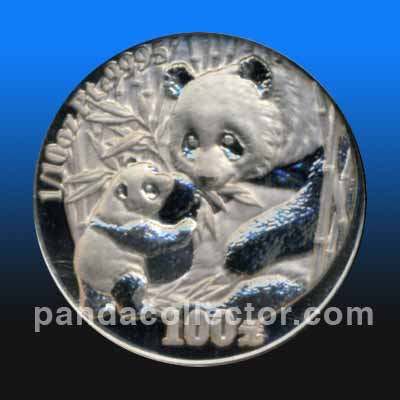
1/10 Oz, or 3.1 grams; Diameter = 18mm; 10 Yuan face value (100 Yuan in 2002 & 2005)
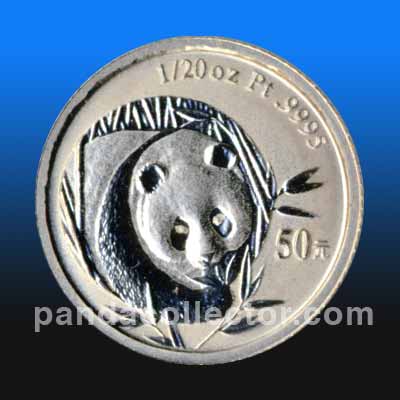
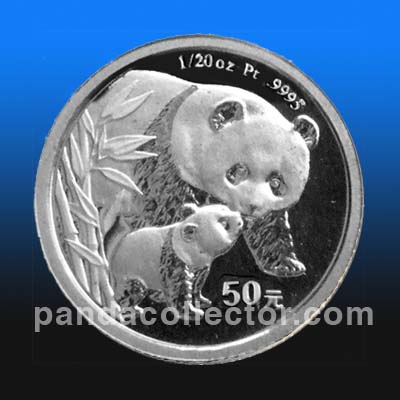
1/20 Oz, or 1.55 grams; Diameter = 14mm; 50 yuan face value (2002 & 2003):
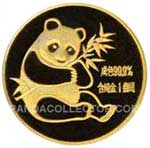
Roll your mouse over the coins to see the obverse side with The Temple of Heaven in Beijing design
PPI (Panda Paucity Index) values: Higher is scarcer
Photos courtesy of CGC Coins
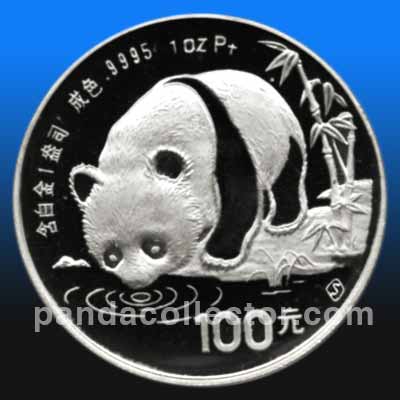
1987 100 Yuan; 1 oz. |
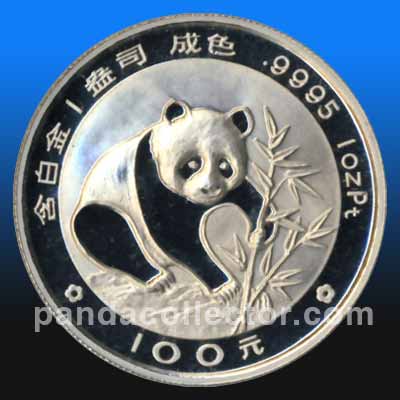
1988 100 Yuan; 1 oz. |
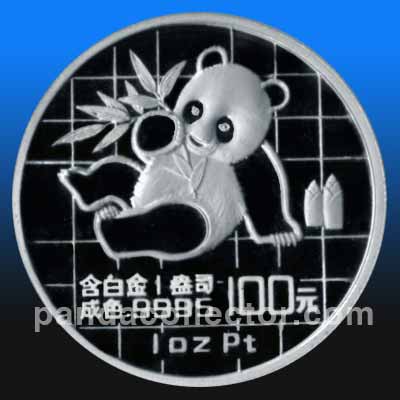
1989 100 Yuan; 1 oz. |
1990 100 Yuan; 1 oz. |
1990 50 Yuan; .5 oz. |
1990 25 Yuan; .25 oz. |
1990 10 Yuan; .10 oz. |
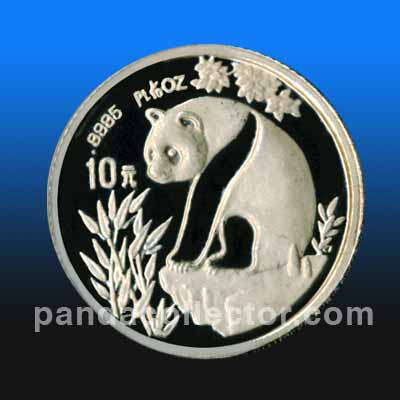
1993 10 Yuan; .10 oz. |
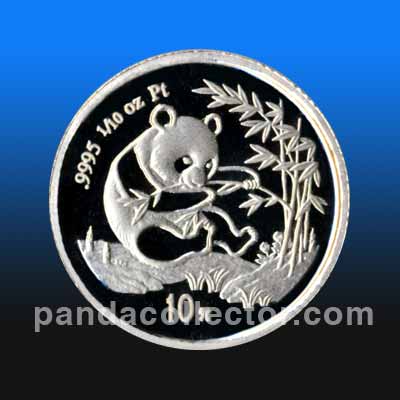
1994 10 Yuan; .10 oz. |
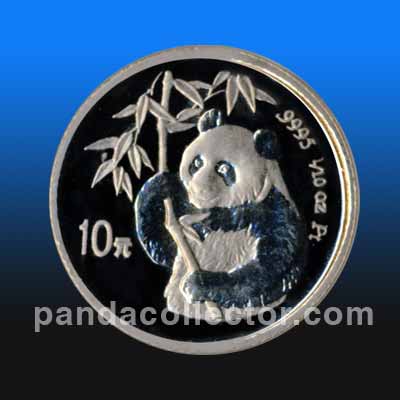
1995 10 Yuan; .10 oz. |
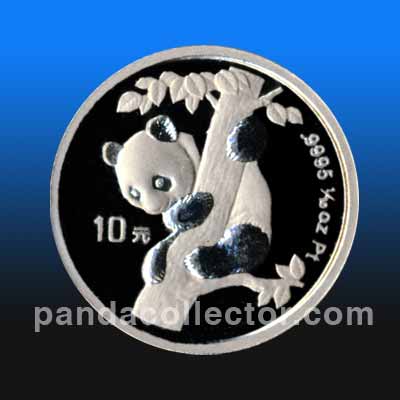
1996 10 Yuan; .10 oz. |
1997 10 Yuan; .10 oz. |
2002 100 Yuan; .10 oz. |
2003 50 Yuan; .05 oz. |
2004 50 Yuan; .05 oz. |
2005 100 Yuan; .10 oz. |

The Platinum Panda
Platinum is much scarcer than gold — only 130 tons of platinum are produced annually versus 2,500 tons of gold. It is the hardest precious metal and has a melting point of 1768°C, compared to gold (1064°) or silver (963°). Hardness, high melting point and scarcity make platinum a difficult material to work with.
For all these reasons, platinum has a very limited history as a coinage metal. The government of Czar Nicholas I issued platinum Russian Rubles from 1825-1855. These are the only platinum coins ever officially released for circulation.
Platinum reappeared in coins during the 1970’s. The first Chinese platinum Panda to be released came in 1987. Since then platinum Pandas have been minted in various sizes and denominations, ranging from tiny 1/20 ounce coins to the one ounce series of 1987 to 1990.
With the possible exception of the 2004-2005 coins, all are quite scarce with very limited mintages. As with other Pandas, the mintages can be deceptive in determining availability. Some coins are much harder to find than they should be, given the official mintage. For collectors this makes the platinum set a challenge to complete. Rare is the dealer who maintains a stock of these coins; in fact, you will be lucky to find more than a few for sale anywhere. Prices have been rising, too. On eBay the average price for a one ounce platinum Panda in original condition has gone from about $1,300 to $2,500 in 2007.
A note: while coin catalogs record that the first platinum Panda was minted in 1987, there were specimen strikes made earlier. In February of 2006, one of the American importers of Pandas offered a one ounce 1982 platinum Panda for sale at $100,000. According to the seller there were 5 specimens made of platinum in 1982. In addition to their extraordinary metal content, the coins were distinguished by the Chinese words “trial strike”, which was placed below the seated panda. Each of the three official distributors received a single coin, while two remained in the hands of Chinese officials.
~PA~